NIGHTMARES OF REASON

An amazing restoration work on a series of Francisco José de Goya y Lucientes’ private drawings is been exhibited at Courtauld Gallery in London until 25 May.

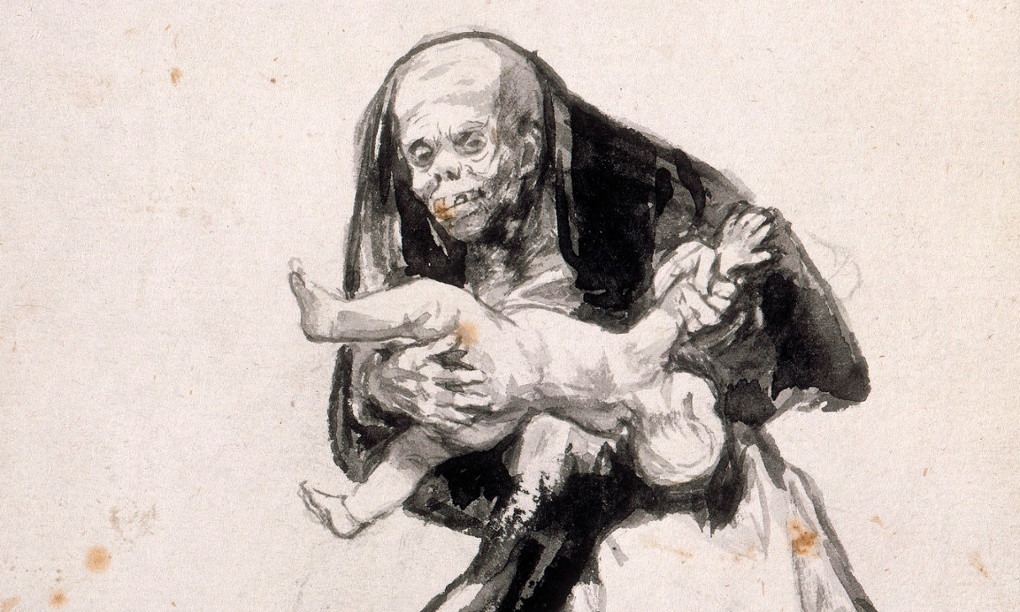
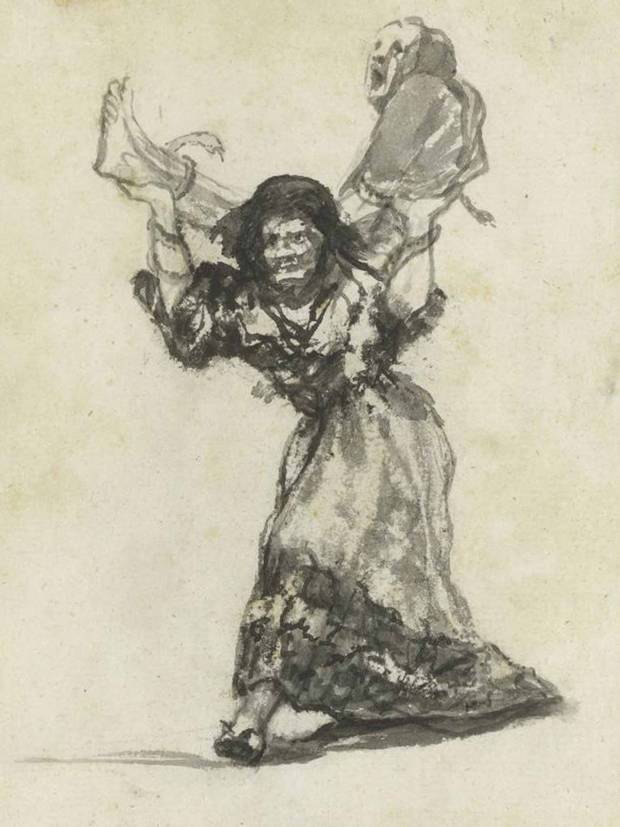
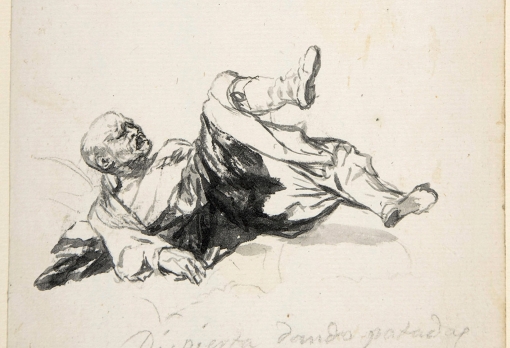
Album D, the Witches and Old Women Album, (circa 1819), have been brought together for the first time to the public in 150 years. Visions and nightmares, superstitions and the problem of old age (represented by witches) are the themes of these drawings, executed only in brush and grey ink and in small scales – you can see quite a few people using magnifying glasses to appreciate in full their details. Although a metaphor of the historical period in Spain and the long Inquisition, they represent mainly neural glimpses of Goya’s mind: his obsession with madness, the unconscious and the human animal.

These darker visions in Goya’s work appear after a mental breakdown and catastrophic illness that left him progressively deaf and socially isolated – presumably the cause was a lead intoxication from the pigments of his paints. After Goya’s death in 1828 these drawings passed to his only son, Javier (five of his six children died as infants – infants and witches are recurrent images in the album) and his grandson and later were bought by Francisco de Madrazo, who became director of the Museo do Prado.
goya2

He wakes up kicking.

nightmare goya

Nightmare – detail (1816-1820)

RMN5003DE

Wicked woman
goya_met

EARLY EPIDEMIC IMAGE

oxcart

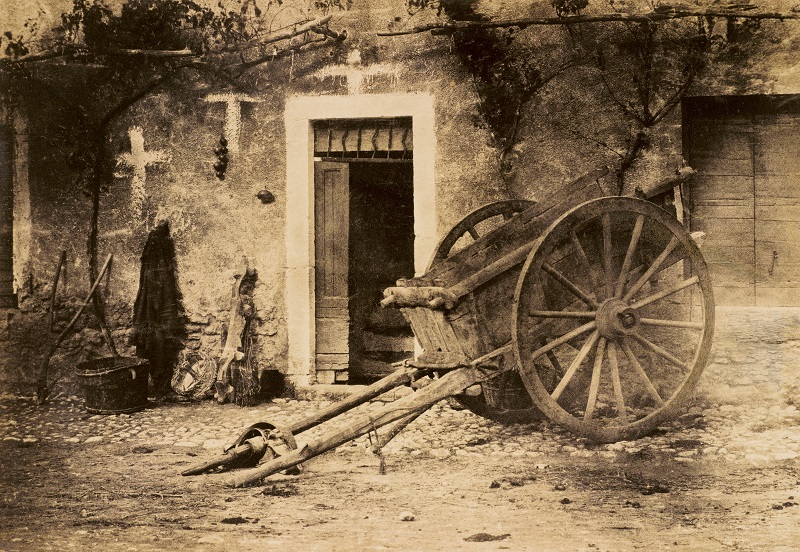
Paul Marès Ox Cart, Brittany, c.1857.

Apparently a picturesque scene of bucolic tranquillity, this photography also reveals two white crosses painted on the cottage wall, a warning that the place was afflicted by the outbreak of some deadly disease.

British photographer, William Henry Fox Talbot, invented the salt print, the earliest form of photographic negative. Salt and Silver is the first exhibition in Britain devoted to salter and paper prints, and includes around a hundred prints from several photographers, made between 1830 and 1860.


Where:  Tate Britain. Until 7 June.

MEMORY JAR

memory jar

(Photo: Grayson Perry)

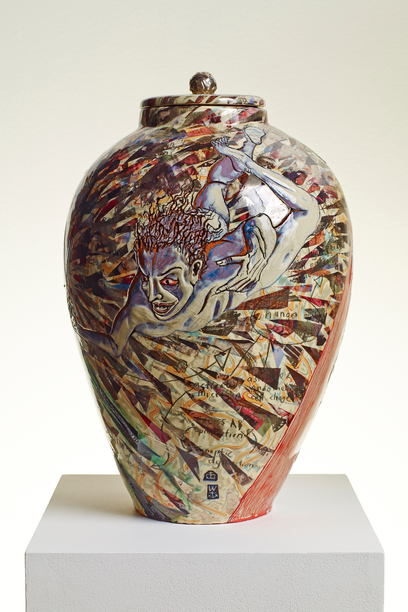
British artist Grayson Perry exhibited his work ‘Memory Jar’ recently at the National Portrait Gallery, a homage to an Alzheimer’s sufferer and his wife, Christopher and Veronica Devas from Dorset. Christopher was diagnosed with Alzheimer’s disease in 2008. Grayson spent three days filming them as part of a Channel Four documentary. He visited Christopher’s former place of work to understand better their memories and even spent a day sailing with the couple. Grayson’s perceptions of the loss caused by the disease during this contact were expressed in his artwork, where their old family photos are shred by a demonic figure called Altzy.

alzh

(Photo: http://www.londonvisitors.wordpress.com)

The documentary can be accessed in Channel Four website.

FORENSICS: THE ANATOMY OF CRIME

Bodies-of-Evidence

(Plan of Mitre Square and Surroundings. Scene of Murder, 1.45am, 30th September 1888 by architect Frederick William Foster, by occasion of the murder of Catherine Eddowes, Jack the Ripper’s fourth victim)

The exhibition “Forensics: anatomy of a crime” has just opened recently at the Wellcome Collection. It focus on the history, science and procedures of forensic medicine: crime scenes, famous crime reports, anatomy and necropsy, identification of victims and investigation of suspects involved in violent crimes, the morgue, the courtroom, and the fascinating evolution of forensic psychiatry. It depicts a rich material, together with artworks and the interface with fiction and public sensationalism.

Some highlights:

bertillon
Alphonse Bertillon was a French police officer and biometrics who developed a innovative anthropological system in 1870s to measure and record the physical characteristics of each suspect. He also standardized the process of photographing criminals.

article_0704-LYO03-LOCARD

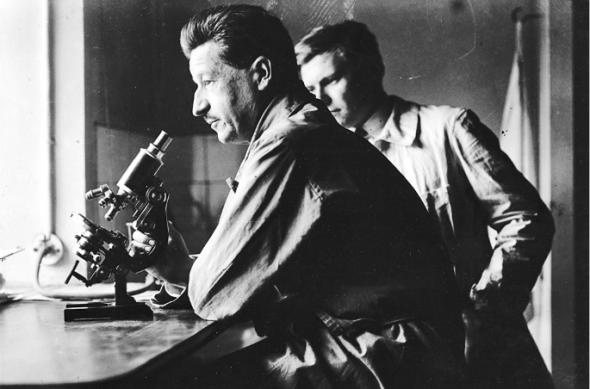
Dr Edmond Locard, known as the Sherlock Holmes of France. He also studied  Law and was the pioneer in setting up a criminal laboratory. The criminologist also contributed to the improvement of dactylography (the study of fingerprints).

Wellcome Collection exhibition

Handwritten autopsy index cards and an illustration of pathologist Sir Bernard Spilsbury. Photograph: Peter Macdiarmid/Getty Images.

floor

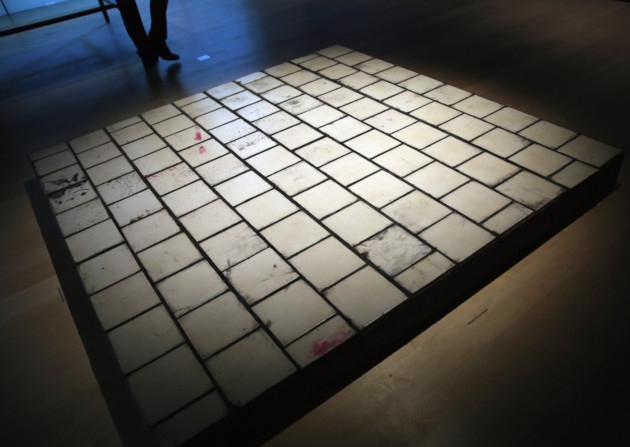
Mexican artist Teresa Margoller transplanted the crime scene: the floor tiles on which her friend was murdered in Mexico.

Wellcome Collection. Opened from Tuesdays to Sunday 10-18h (on Thursday opened till 22h).
183 Euston Road, London NW1 2BE, UK.
Free admission. Till June 21st.

MARTHA BERNAYS AND SIGMUND FREUD’S LOVE LETTERS

freud martha

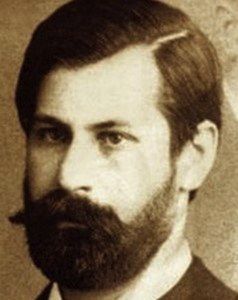
Sigmund Freud and Martha Bernays exchanged over 1,500 love letters from 1882 to 1886 during their long engagement, with its bliss, longing, restrictions and misunderstandings. They wrote very often to each other, sometimes twice a day. The couple was separated while Freud completed his medical studies, as Martha Bernays had to move with her Jewish orthodox family to Hamburg.

The letters were kept secret until last year due to Freud family reticence. Not even Freud biographers, except Ernest Jones, had access to these letters.In April 2011, the first book of a planned five-edition of the complete correspondence between the couple was published by Fischer Verlag in Germany. They reveal a young, passionate and impatient neurologist frustrated to be locked in his laboratory in Vienna, far from his beloved fiancee. Freud would give up a career as a neurophysiologist because of that.

This week the former director of Freud’s Museum, Michael Molnar, gave and interesting talk, “Paper with Sacred Signs: Love Letters of Sigmund Freud”, about the correspondence, as part of the exhibition “Love, lust and longing” at the museum. For Molnar, the letters reveal the other side of the couple: some of Freud letters were accessible to the public, but not Martha’s answers to them. Martha, a beautiful, and clever girl, had a couple of other admirers. Her letters to Freud were warm and affectionate, but also ironic. Freud was jealous about her friendships, and insecure with the distance, as most of the relationship happened in the paper.

Molnar showed an except of a letter of Martha in response to a photography sent in her birthday in 1884 (curiously, somebody pointed at the audience that Martha and Jung shared the same birthday):

freud

“Dearest, you don’t always look so displeased, do you? You can still laugh too?”.

In another interesting letter, Freud write to her: “you must love me as irrationally as other people love”.

Michael Molnar translated some of the letters into English, which can be seen at the exhibition (which was now extended to the public for more a fortnight, until 22th March). The second volume of the letters were out in 2013 in Germany. The rights to publish them are available so far Spanish in Portuguese (still in translation) but not yet in English.

An interesting detail: after their marriage, Freud forbade Martha’s religious practices. One of the most valuable pieces of Freud collection showed in the exhibition is a Hanukkah candle, but it is not known if Martha ever used it. After Freud’s death, she resumed her faith.

FREUD AND THE POWER OF LOVE

eros
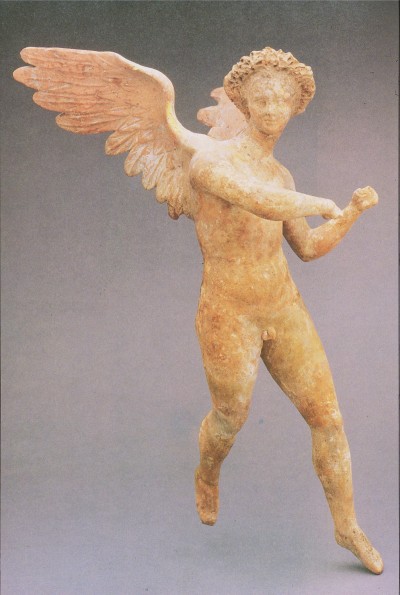
(Eros: hellenist period c150-100BC. Image: Freud museum)

This week is the last opportunity to see the exhibition “Freud and Eros: Love, lust and longing” at the Freud Museum in London. The exhibition explores Freud’s idea on love and erotism, and includes his love letters to his wife; items selected of his collection, like images of Eros and Venus and phallic amulets; together with the work of other artists.

Freud museum is the house where Freud spent the last year of his life, after his exile from the Nazis in 1938. His daughter, the child psychologist Anna Freud, lived there until her death in 1982.

img_3567

The study was preserved carefully by Anna Freud just as Freud left it, with the famous couch, surrounded by book and his fine collection of Greek, Egyptian, Romand and oriental antiques. Freud’s famous patient “wolf man” described it not as a doctor’s office, but rather as an archeologist’s study. The atmosphere is very mysterious indeed. It also contains photographs of Martha Freud, Lou Andreas-Salomé (his first female patient), Yvette Guilbert, Marie Bonaparte, and Ernst von Fleischl.

Anna Freud lived in the upper room, which contains some furniture from her study, together  with her analytic couch.

Love, lust and longing. Until 8 Mar.

Freud museum is opened to public from Wednesdays to Sundays (12h-17h). Address: 20 Maresfield Gardens London NW3 5SX. Tel: +44 (0)20 7435 2002

BISPO DO ROSÁRIO’S VISIONS OF PASSAGE

Bispo-1

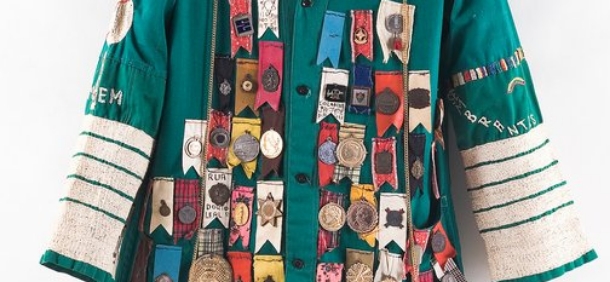
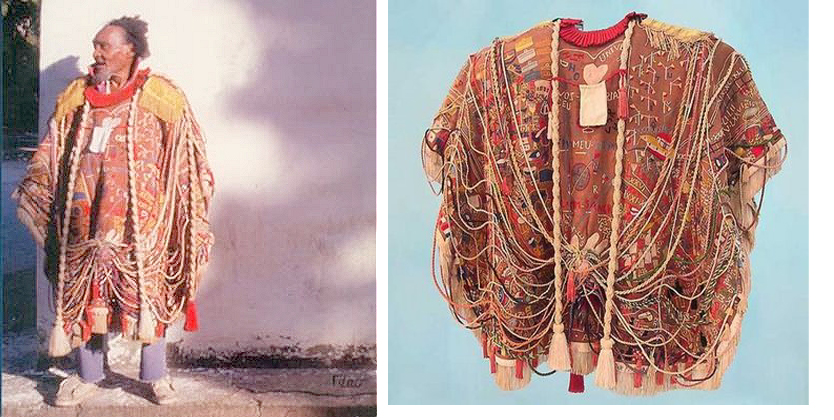
(Manto da representação, a ceremonial cape)

Arthur Bispo do Rosário (1909-1989) was born in Japaratuba, Sergipe, a small town in Brazilian North-East – a region known for its folk art and religious culture. He joined the navy in 1925, worked as a handyman and was also an amateur boxer. By the time he presented psychiatric symptoms (hallucinations) he was a domestic worker, living with a family in Botafogo, Rio de Janeiro. According to the history, Bispo do Rosário ‘entered a Rio monastery at 29 while conducting an imaginary army of angels and announced he had come to judge the living and the dead’. He was diagnosed with schizophrenia in 1938, and hospitalized for more than 50 years in a famous asylum in Rio, Colônia Juliano Moreira.

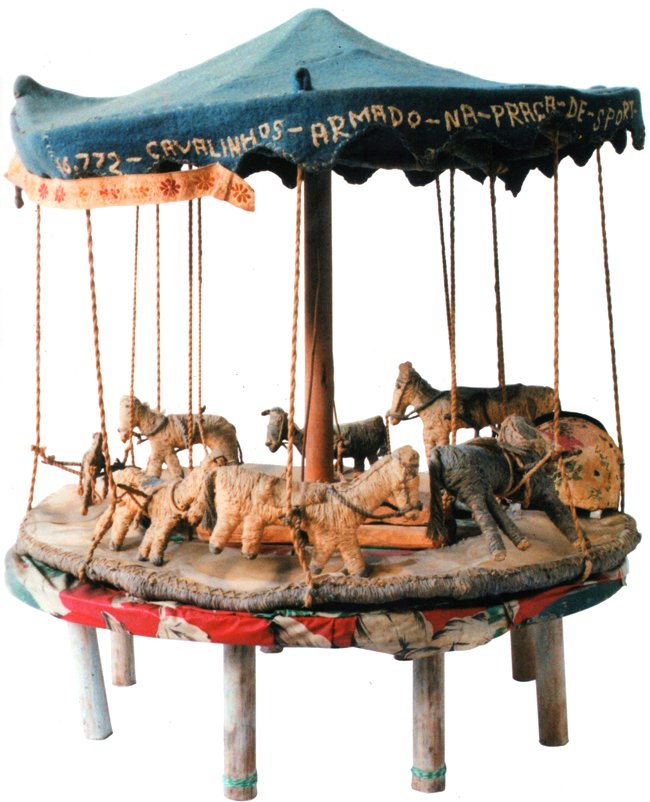
Completely isolated from the art establishment, Bispo do Rosário’s creations were viewed by himself as a spiritual journey to salvation: the mission of his artwork was to reach god and transcendence, a strategy he found to deal with his delirium. His ‘outsider’ art has long been celebrated for its imaginative approach to working with everyday, found materials in textiles and a variety of objects – he made use of all sort of discarded materials and hospital items in his work.

fights


brosario

His work became well known after a documentary made by psychoanalyst Hugo Denizart in 1982 at the request of the Brazilian Ministry of Health to investigate the condition at the hospital where Bispo do Rosário lived. During this process Denizaro was so impressed with Rosário that decided to change the focus of his investigation.

bispo

The documentary ‘Prisioner of passage’ (see excerpt below) and Bispo do Rosário’s artworks were exhibited in modern art museums and at the Bienal in Brazil, and later at the Venice Bienal and more recently (2012) at the V&A Museum in London.

Virna Teixeira