STILLNESS AND SPEED IN ANDY WARHOL’S WORK

Andy Warhol produced more than seventy films during his life, later often in collaboration with other producers. His early films were made while his studio, the Factory, was being created, and were experiments in silent film. His silent early films are: Sleep, Empire, Eat, Haircut (N.1), all produced in 1963, Kiss (1963-1964), Blow-Job (1964), and Henry Geldzahler (1964), and some Screen Tests. In those silent movies, the camera is still, with occasional slight zoom. Warhol achieved this effect of stillness through the resource of silent speed.

Sleep (1963) was Andy Warhol’s first long film, in which he used his first camera, a 16mm Bolex. It starred Warhol’s then boyfriend John Giorno sleeping for five hours 21 minutes. The film is made up of a complex editing, and it was shot in different sessions over a few days.

Sleep begins with the image of Giorno’s breathing abdominal movements and face in an uncommon take. Due to the complex editing process, the slow repetition split into reels, the lack of sound and the lack of linear narrative, this film is a strange experience to watch. Long periods of the same image are followed by jumpy changes to different close-ups of Giorno’s body: his head, his knee, his chest, the lower buttocks, and the upper part of his legs. There is an element of homoeroticism, but in some moments where Giorno’s body is still, the film seems to progress to a kind of evocation of death. Critic Henry Geldzahler perceived in Sleep an intimate understanding of John Cage’s work, especially in the repetitive aspects.

John Giorno commented in an interview that Warhol had chosen to film him because he slept too much. Andy Warhol, by the other hand, reveals his own motivations in the books he wrote about the sixties and about his philosophy: people around him (and he himself) were too high on amphetamines (speed) to sleep, and everybody was continuously sleep deprived. In the Philosophy of Andy Warhol he comments:

Another thing I couldn’t understand was all those people who never slept who were always announcing: “Oh I am hitting my ninth day and it’s glorious!” So I thought, “Maybe it’s time to do a movie about somebody who sleeps all night. But I only had a camera that had three minutes on it, so I had to change the camera every three minutes to shoot three minutes. I slowed down the movie to make up for all the three minutes I lost changing the film, and we ran it at a slower speed to make up for the film I didn’t shoot.

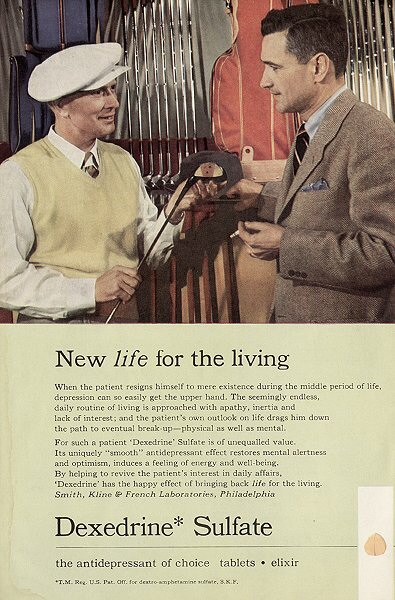
The fact coincides with the first epidemics of amphetamines in the U.S.(Rasmussen, 2008). Warhol started to use amphetamine in early 60’s to control his weight. His favorite speed was a powerful tablet named Obetrol (containing up to 10mg of methamphetamine, 5mg of original Benzedrine-style amphetamine, adding subjective ‘buzz’). He reportedly enjoyed Dexamyl as well.

In Popism, he mentions his sleep deprivation:

I could never finally figure out if more things happened in the sixties because there was more awake time for them to happen in (since so many people were on amphetamine), or if people started taking amphetamine because there were so many things to do that they needed to have more awake time to do them in. It was probably both…I only slept two or three hours a night from ’65 through ’67.

The morning one of his crazed former actress Valerie Solanas shot him in 1968, he was filling his Obetrol prescription, and he continued taking amphetamines until he died in 1987 (Collacelo, 1990).

REFERENCES:

Andy Warhol and Pat Hackett, Popism: The Warhol Sixties (Orlando: Harcourt Brace Jovanovitch, 1980), p. 33.

Andy Warhol, The Philosophy of Andy Warhol: from A to B and back again, (London: Pan Books, 1975), p. 14.

Colacello, Bob, Holy Terror: Andy Warhol Close Up (New York: Harper Collins, 1990).

Rasmussen, Nicholas, On Speed: the Many Lives of Amphetamine (New York, London: New York University Press, 2008).

Virna Teixeira

diane

Diane Arbus. A Jewish giant at home with his parents, in the Bronx, N.Y., 1970.

Eddie Carmel was the son of immigrants from Tel Aviv. He worked as a main attraction in a circus in New York, as “The World’s Tallest Man”. Eddie Carmel started suffering from acromegaly (a condition in which the body produces too much growth hormone) when he was fifteen, due to an inoperable pituitary tumor. His condition got worse over the years, and in order to break his isolation, he started to work in show business. Diane Arbus met Eddie in 1960, ten years before the famous picture, which was the centerpiece of an exhibition at the Jewish Museum in New York last year. A close read of the story can be read in Arthur Lubow’s article.

Patricia Bosworth comments in “Diane Arbus – a biography” about the early fascination of the photographer with variations of body and biology – like purple birthmarks, albinism, identical twins, triplets, dwarfism. According to Arbus: “I really believe that there are things nobody would see if I didn’t photograph them”.

L0057102 Mahogany medicine chest, England, 1801-1900

“The mahogany medicine chest contains boxes, bottles and tubes of medications to treat a number of conditions. The chest includes treatments to purge the body by vomiting (emetics), by sweating (diaphoretics), as well as general purgatives such as rhubarb, jalap and calomel. Other medications include pain relief, such as opium plus astringents and stimulants, including ginger and lavender. The chest contains a handwritten inventory listing the medications. The chest also includes a set of scales, weights, a pill tile and a spatula. The set was probably used in the home or by a chemist or apothecary.”

Unknown maker. England, United Kingdom. Made: 1801-1900.

Source: Science Museum/ Wellcome Images

THE DOCTOR (1991)


Jack MacKee is a well succeeded, workaholic and egotistical surgeon who passes through a major life transformation after being diagnosed with a throat cancer. He is forced to reevaluate his unfeeling treatment of his patients after becoming a patient himself. The film is loosely based on the autobiographical book ‘A Taste of My Own Medicine’ by Dr. Ed Rosenbaum.

‘WE ARE FAMILY’: PHOTOGRAPHY AND ALCOHOLISM

fishtank_abouttheartist_image_1

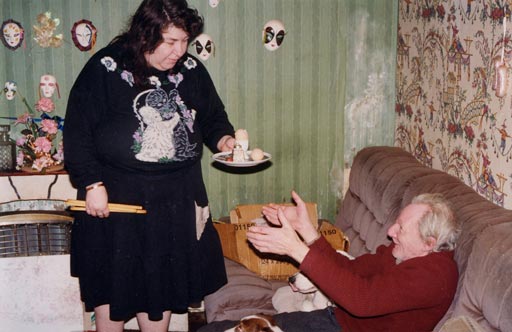
Richard Billingham (Birmingham, 1970) is an English photographer and artist who became well known after his photo-book ‘Ray’s A Laugh’ (1996). The book shows private snap shots of his alcoholic father Ray, of his heavily tattooed and obese chain-smoker mother, Liz, and of his unruly brother.

20101022110225_richard_billingham_untitled6-custom-2

“I was living in this tower block; there was just me and him. He was an alcoholic, he would lie in the bed, drink, get to sleep, wake up, get to sleep, didn’t know if it was day or night. But it was difficult to get him to stay still for more than say 20 minutes at a time so I thought that if I could take photographs of him that would act as source material for these paintings and then I could make more detailed paintings later on. So that’s how I first started taking photographs.”

bil4_g

“My dad had moved into my mum’s place by this time and I could not believe how it looked. She’d had two years away from my dad so she had created her own psychological space around herself that was very ‘carnivalesque’ and decorative. There were dolls, jigsaws everywhere. She’d got load of pets by this time; she had about ten cats … two, three dogs.” (Richard (Billingham, In: ‘We are family’, Genius of Photography).

richard_billingham_3


4cdbf2154c73d9837016f17f848a35f3

(In 1997 Richard Billingham participated in the famous exhibition ‘Sensation’ at the Royal Academy of Arts, and was nominated for the Turner Prize in 2001)

giuseppe

Giuseppe Maria Mitelli. Il Mondo e per lo più gabbia di matti (1684).

‘The tradition of visually representing madness in the form of various icons, whether physiognomy, or body type, gesture or dress, points towards the need of a society to identify the mad absolutely. Society, which defines itself as sane, must be able to localize and confine the mad, if only visually, in order to create a separation between the sane and the insane.’

Sander L. Gilman

(In: Disease and representation:Images of Illness from Madness to AIDS. Ithaca and London: Cornell University Press, 1988, p. 45)