MEMORY JAR

memory jar

(Photo: Grayson Perry)

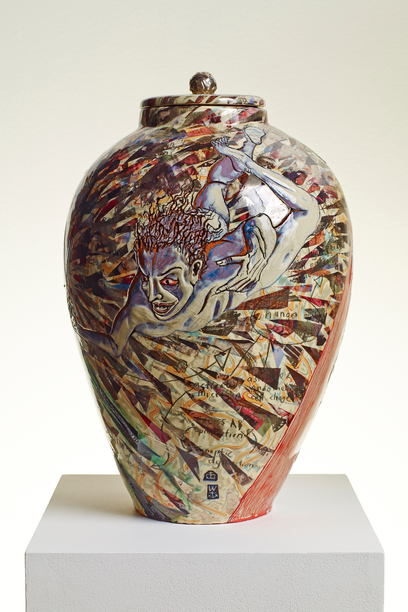
British artist Grayson Perry exhibited his work ‘Memory Jar’ recently at the National Portrait Gallery, a homage to an Alzheimer’s sufferer and his wife, Christopher and Veronica Devas from Dorset. Christopher was diagnosed with Alzheimer’s disease in 2008. Grayson spent three days filming them as part of a Channel Four documentary. He visited Christopher’s former place of work to understand better their memories and even spent a day sailing with the couple. Grayson’s perceptions of the loss caused by the disease during this contact were expressed in his artwork, where their old family photos are shred by a demonic figure called Altzy.

alzh

(Photo: http://www.londonvisitors.wordpress.com)

The documentary can be accessed in Channel Four website.

FORENSICS: THE ANATOMY OF CRIME

Bodies-of-Evidence

(Plan of Mitre Square and Surroundings. Scene of Murder, 1.45am, 30th September 1888 by architect Frederick William Foster, by occasion of the murder of Catherine Eddowes, Jack the Ripper’s fourth victim)

The exhibition “Forensics: anatomy of a crime” has just opened recently at the Wellcome Collection. It focus on the history, science and procedures of forensic medicine: crime scenes, famous crime reports, anatomy and necropsy, identification of victims and investigation of suspects involved in violent crimes, the morgue, the courtroom, and the fascinating evolution of forensic psychiatry. It depicts a rich material, together with artworks and the interface with fiction and public sensationalism.

Some highlights:

bertillon
Alphonse Bertillon was a French police officer and biometrics who developed a innovative anthropological system in 1870s to measure and record the physical characteristics of each suspect. He also standardized the process of photographing criminals.

article_0704-LYO03-LOCARD

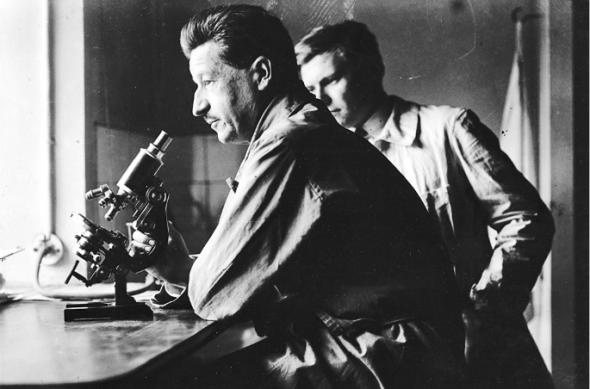
Dr Edmond Locard, known as the Sherlock Holmes of France. He also studied  Law and was the pioneer in setting up a criminal laboratory. The criminologist also contributed to the improvement of dactylography (the study of fingerprints).

Wellcome Collection exhibition

Handwritten autopsy index cards and an illustration of pathologist Sir Bernard Spilsbury. Photograph: Peter Macdiarmid/Getty Images.

floor

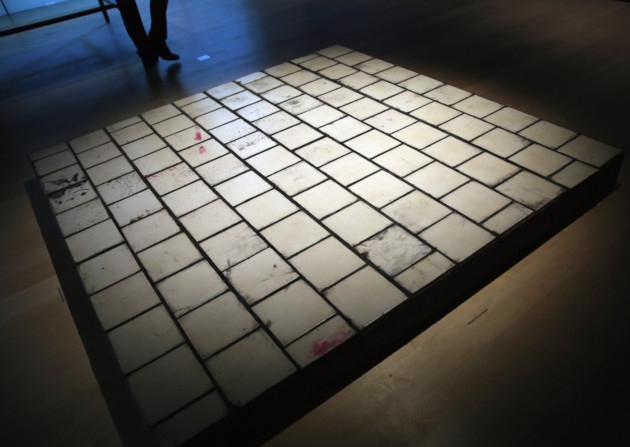
Mexican artist Teresa Margoller transplanted the crime scene: the floor tiles on which her friend was murdered in Mexico.

Wellcome Collection. Opened from Tuesdays to Sunday 10-18h (on Thursday opened till 22h).
183 Euston Road, London NW1 2BE, UK.
Free admission. Till June 21st.

MARTHA BERNAYS AND SIGMUND FREUD’S LOVE LETTERS

freud martha

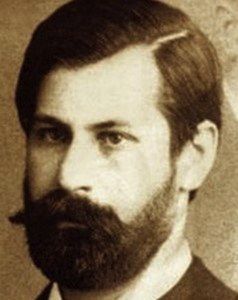
Sigmund Freud and Martha Bernays exchanged over 1,500 love letters from 1882 to 1886 during their long engagement, with its bliss, longing, restrictions and misunderstandings. They wrote very often to each other, sometimes twice a day. The couple was separated while Freud completed his medical studies, as Martha Bernays had to move with her Jewish orthodox family to Hamburg.

The letters were kept secret until last year due to Freud family reticence. Not even Freud biographers, except Ernest Jones, had access to these letters.In April 2011, the first book of a planned five-edition of the complete correspondence between the couple was published by Fischer Verlag in Germany. They reveal a young, passionate and impatient neurologist frustrated to be locked in his laboratory in Vienna, far from his beloved fiancee. Freud would give up a career as a neurophysiologist because of that.

This week the former director of Freud’s Museum, Michael Molnar, gave and interesting talk, “Paper with Sacred Signs: Love Letters of Sigmund Freud”, about the correspondence, as part of the exhibition “Love, lust and longing” at the museum. For Molnar, the letters reveal the other side of the couple: some of Freud letters were accessible to the public, but not Martha’s answers to them. Martha, a beautiful, and clever girl, had a couple of other admirers. Her letters to Freud were warm and affectionate, but also ironic. Freud was jealous about her friendships, and insecure with the distance, as most of the relationship happened in the paper.

Molnar showed an except of a letter of Martha in response to a photography sent in her birthday in 1884 (curiously, somebody pointed at the audience that Martha and Jung shared the same birthday):

freud

“Dearest, you don’t always look so displeased, do you? You can still laugh too?”.

In another interesting letter, Freud write to her: “you must love me as irrationally as other people love”.

Michael Molnar translated some of the letters into English, which can be seen at the exhibition (which was now extended to the public for more a fortnight, until 22th March). The second volume of the letters were out in 2013 in Germany. The rights to publish them are available so far Spanish in Portuguese (still in translation) but not yet in English.

An interesting detail: after their marriage, Freud forbade Martha’s religious practices. One of the most valuable pieces of Freud collection showed in the exhibition is a Hanukkah candle, but it is not known if Martha ever used it. After Freud’s death, she resumed her faith.

FREUD AND THE POWER OF LOVE

eros
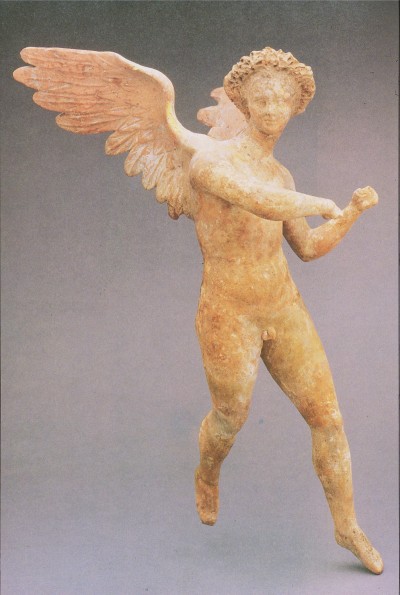
(Eros: hellenist period c150-100BC. Image: Freud museum)

This week is the last opportunity to see the exhibition “Freud and Eros: Love, lust and longing” at the Freud Museum in London. The exhibition explores Freud’s idea on love and erotism, and includes his love letters to his wife; items selected of his collection, like images of Eros and Venus and phallic amulets; together with the work of other artists.

Freud museum is the house where Freud spent the last year of his life, after his exile from the Nazis in 1938. His daughter, the child psychologist Anna Freud, lived there until her death in 1982.

img_3567

The study was preserved carefully by Anna Freud just as Freud left it, with the famous couch, surrounded by book and his fine collection of Greek, Egyptian, Romand and oriental antiques. Freud’s famous patient “wolf man” described it not as a doctor’s office, but rather as an archeologist’s study. The atmosphere is very mysterious indeed. It also contains photographs of Martha Freud, Lou Andreas-Salomé (his first female patient), Yvette Guilbert, Marie Bonaparte, and Ernst von Fleischl.

Anna Freud lived in the upper room, which contains some furniture from her study, together  with her analytic couch.

Love, lust and longing. Until 8 Mar.

Freud museum is opened to public from Wednesdays to Sundays (12h-17h). Address: 20 Maresfield Gardens London NW3 5SX. Tel: +44 (0)20 7435 2002

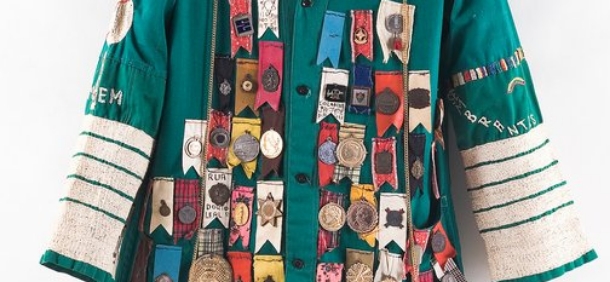
BISPO DO ROSÁRIO’S VISIONS OF PASSAGE

Bispo-1

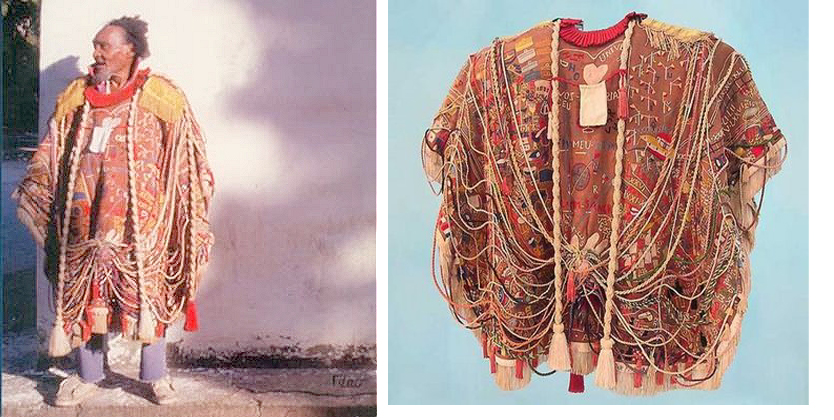
(Manto da representação, a ceremonial cape)

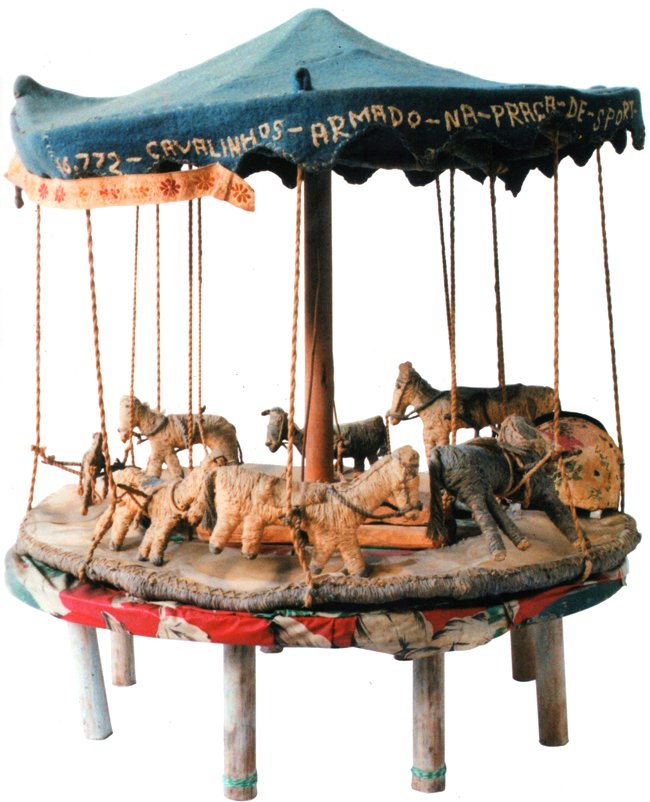
Arthur Bispo do Rosário (1909-1989) was born in Japaratuba, Sergipe, a small town in Brazilian North-East – a region known for its folk art and religious culture. He joined the navy in 1925, worked as a handyman and was also an amateur boxer. By the time he presented psychiatric symptoms (hallucinations) he was a domestic worker, living with a family in Botafogo, Rio de Janeiro. According to the history, Bispo do Rosário ‘entered a Rio monastery at 29 while conducting an imaginary army of angels and announced he had come to judge the living and the dead’. He was diagnosed with schizophrenia in 1938, and hospitalized for more than 50 years in a famous asylum in Rio, Colônia Juliano Moreira.

Completely isolated from the art establishment, Bispo do Rosário’s creations were viewed by himself as a spiritual journey to salvation: the mission of his artwork was to reach god and transcendence, a strategy he found to deal with his delirium. His ‘outsider’ art has long been celebrated for its imaginative approach to working with everyday, found materials in textiles and a variety of objects – he made use of all sort of discarded materials and hospital items in his work.

fights


brosario

His work became well known after a documentary made by psychoanalyst Hugo Denizart in 1982 at the request of the Brazilian Ministry of Health to investigate the condition at the hospital where Bispo do Rosário lived. During this process Denizaro was so impressed with Rosário that decided to change the focus of his investigation.

bispo

The documentary ‘Prisioner of passage’ (see excerpt below) and Bispo do Rosário’s artworks were exhibited in modern art museums and at the Bienal in Brazil, and later at the Venice Bienal and more recently (2012) at the V&A Museum in London.

Virna Teixeira


STILLNESS AND SPEED IN ANDY WARHOL’S WORK

Andy Warhol produced more than seventy films during his life, later often in collaboration with other producers. His early films were made while his studio, the Factory, was being created, and were experiments in silent film. His silent early films are: Sleep, Empire, Eat, Haircut (N.1), all produced in 1963, Kiss (1963-1964), Blow-Job (1964), and Henry Geldzahler (1964), and some Screen Tests. In those silent movies, the camera is still, with occasional slight zoom. Warhol achieved this effect of stillness through the resource of silent speed.

Sleep (1963) was Andy Warhol’s first long film, in which he used his first camera, a 16mm Bolex. It starred Warhol’s then boyfriend John Giorno sleeping for five hours 21 minutes. The film is made up of a complex editing, and it was shot in different sessions over a few days.

Sleep begins with the image of Giorno’s breathing abdominal movements and face in an uncommon take. Due to the complex editing process, the slow repetition split into reels, the lack of sound and the lack of linear narrative, this film is a strange experience to watch. Long periods of the same image are followed by jumpy changes to different close-ups of Giorno’s body: his head, his knee, his chest, the lower buttocks, and the upper part of his legs. There is an element of homoeroticism, but in some moments where Giorno’s body is still, the film seems to progress to a kind of evocation of death. Critic Henry Geldzahler perceived in Sleep an intimate understanding of John Cage’s work, especially in the repetitive aspects.

John Giorno commented in an interview that Warhol had chosen to film him because he slept too much. Andy Warhol, by the other hand, reveals his own motivations in the books he wrote about the sixties and about his philosophy: people around him (and he himself) were too high on amphetamines (speed) to sleep, and everybody was continuously sleep deprived. In the Philosophy of Andy Warhol he comments:

Another thing I couldn’t understand was all those people who never slept who were always announcing: “Oh I am hitting my ninth day and it’s glorious!” So I thought, “Maybe it’s time to do a movie about somebody who sleeps all night. But I only had a camera that had three minutes on it, so I had to change the camera every three minutes to shoot three minutes. I slowed down the movie to make up for all the three minutes I lost changing the film, and we ran it at a slower speed to make up for the film I didn’t shoot.

The fact coincides with the first epidemics of amphetamines in the U.S.(Rasmussen, 2008). Warhol started to use amphetamine in early 60’s to control his weight. His favorite speed was a powerful tablet named Obetrol (containing up to 10mg of methamphetamine, 5mg of original Benzedrine-style amphetamine, adding subjective ‘buzz’). He reportedly enjoyed Dexamyl as well.

In Popism, he mentions his sleep deprivation:

I could never finally figure out if more things happened in the sixties because there was more awake time for them to happen in (since so many people were on amphetamine), or if people started taking amphetamine because there were so many things to do that they needed to have more awake time to do them in. It was probably both…I only slept two or three hours a night from ’65 through ’67.

The morning one of his crazed former actress Valerie Solanas shot him in 1968, he was filling his Obetrol prescription, and he continued taking amphetamines until he died in 1987 (Collacelo, 1990).

REFERENCES:

Andy Warhol and Pat Hackett, Popism: The Warhol Sixties (Orlando: Harcourt Brace Jovanovitch, 1980), p. 33.

Andy Warhol, The Philosophy of Andy Warhol: from A to B and back again, (London: Pan Books, 1975), p. 14.

Colacello, Bob, Holy Terror: Andy Warhol Close Up (New York: Harper Collins, 1990).

Rasmussen, Nicholas, On Speed: the Many Lives of Amphetamine (New York, London: New York University Press, 2008).

Virna Teixeira
diane

Diane Arbus. A Jewish giant at home with his parents, in the Bronx, N.Y., 1970.

Eddie Carmel was the son of immigrants from Tel Aviv. He worked as a main attraction in a circus in New York, as “The World’s Tallest Man”. Eddie Carmel started suffering from acromegaly (a condition in which the body produces too much growth hormone) when he was fifteen, due to an inoperable pituitary tumor. His condition got worse over the years, and in order to break his isolation, he started to work in show business. Diane Arbus met Eddie in 1960, ten years before the famous picture, which was the centerpiece of an exhibition at the Jewish Museum in New York last year. A close read of the story can be read in Arthur Lubow’s article.

Patricia Bosworth comments in “Diane Arbus – a biography” about the early fascination of the photographer with variations of body and biology – like purple birthmarks, albinism, identical twins, triplets, dwarfism. According to Arbus: “I really believe that there are things nobody would see if I didn’t photograph them”.